10
Min reading
18/6/2026
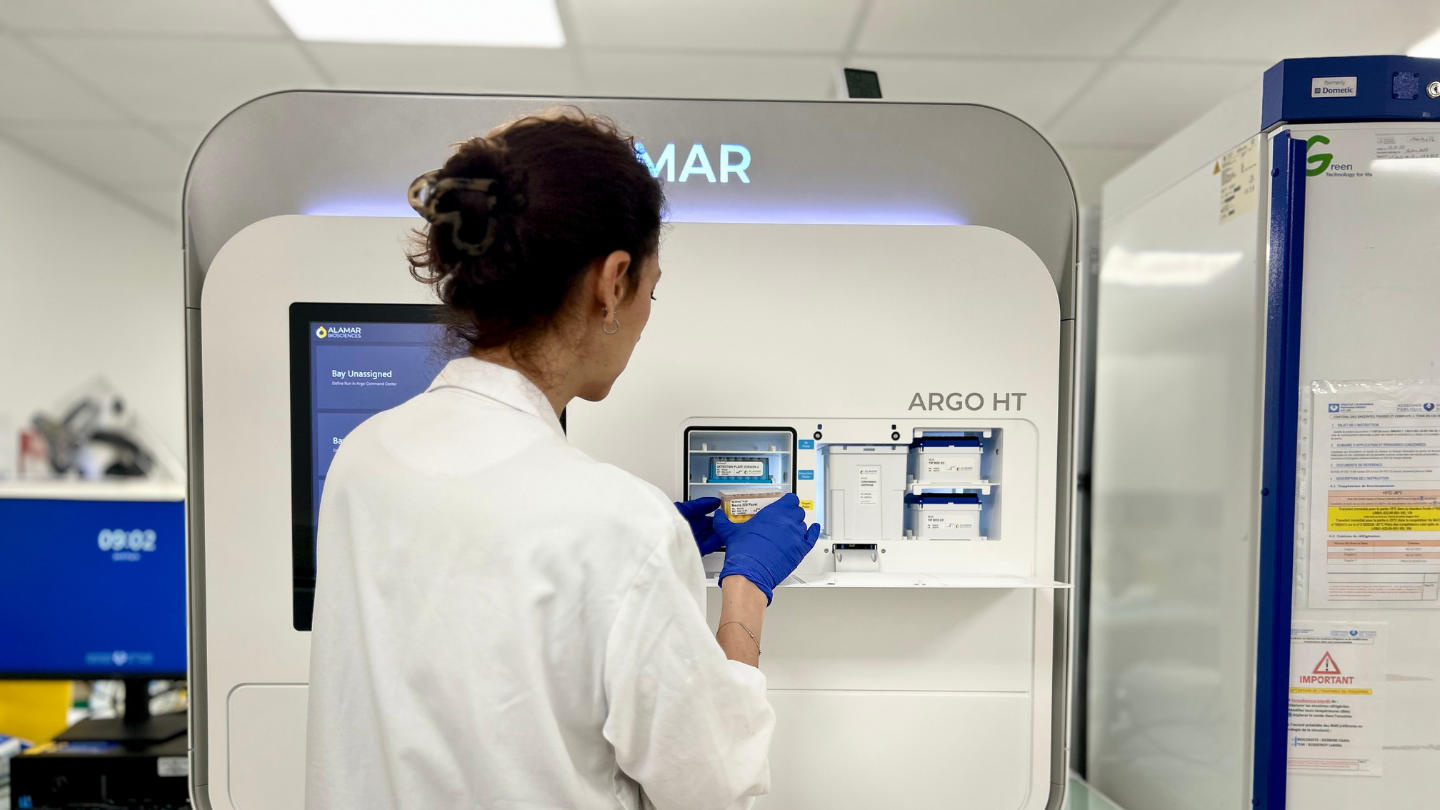
Plateforme clinique de protéomique ultra-sensible NULISA™
L’Institut reConnect, l’AP-HP et le biocluster Brain&Mind inaugurent une plateforme clinique de protéomique ultra-sensible à l'hôpital Lariboisière AP-HP
Meet Geoffrey Kretz, president and founder of Kwit, the French startup that uses digital technologies to fight against addictions.
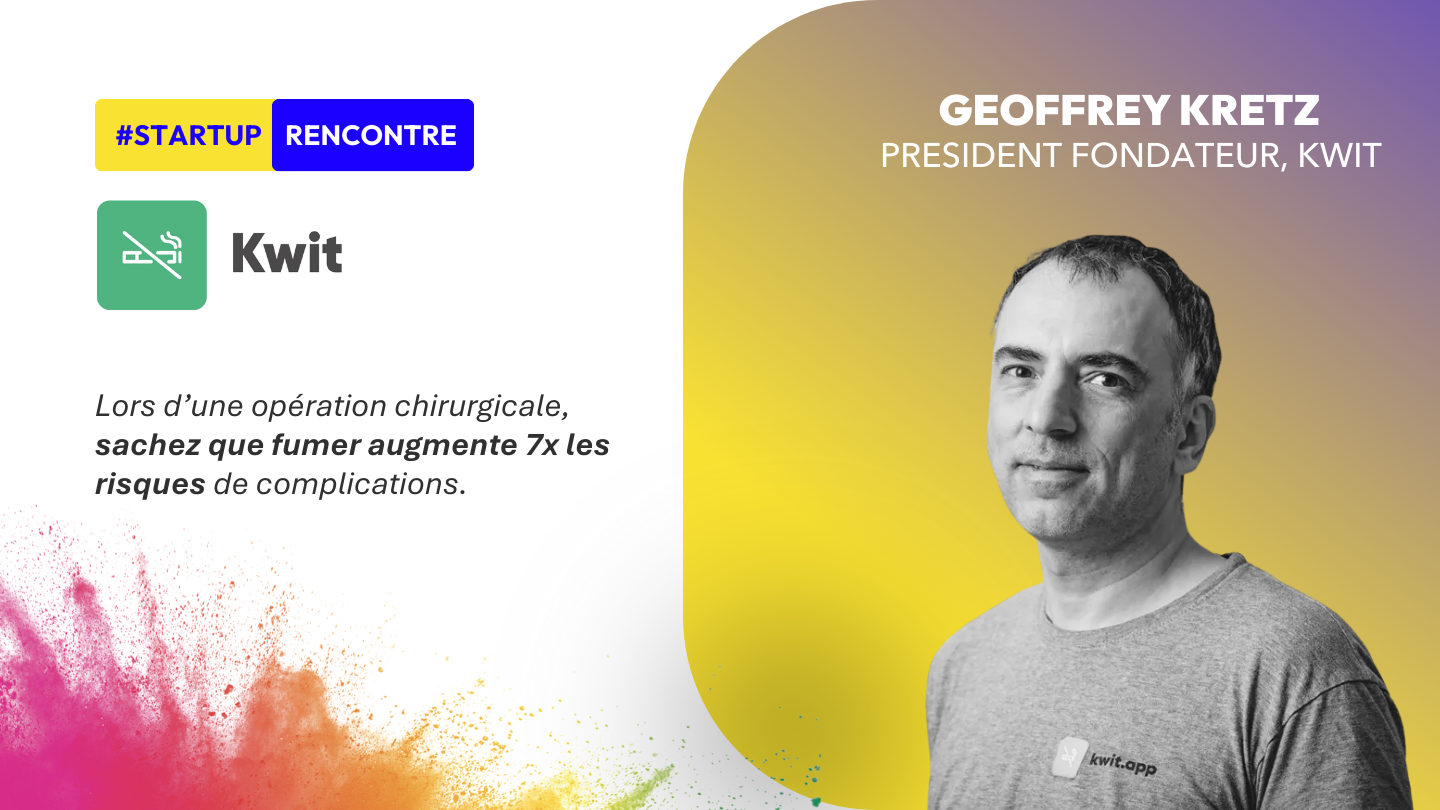
Meet Geoffrey Kretz, president and founder of Kwit, the French startup that uses digital technology to effectively fight against addictions. After the Kwit application, which has 5 million users and is already recommended by the WHO, Kwit SAS now aims to take a new step: develop a genuine digital medical device capable of supporting the anxiety of the care process in order to optimize smoking cessation, and reduce the surgical complications associated with smoking.
Support adapted to patients... and a possible revolution for surgeons.
Geoffrey Kretz:
“Hi, I'm Geoffrey, the founder of the company Kwit, which develops digital solutions to fight addictions. Our first application, also called Kwit, is designed to support smoking cessation; another, called Sobero, helps to control alcohol consumption. Our applications are based on cognitive-behavioral therapies and gamification. Kwit already supports 5 million users and is validated and recommended by the WHO.”
Geoffrey Kretz:
“We all know that tobacco is a general public health problem. More particularly for patients undergoing surgery, it greatly reduces healing and repair processes, with very important consequences. We looked for where our solutions could have a directly measurable clinical impact. With Brain&Mind, we identified the perisurgical period, a stressful context for the patient, and specifically the orthopedic field which, in addition to weaning itself, offers measurable follow-up criteria with an impact on recovery. Smokers who undergo orthopedic surgery - knee, hip, ligament, Achilles tendon - are 7 times more likely to have complications if they continue to smoke before or after the procedure. These complications can delay bone consolidation, extend the length of hospital stay and decrease the chances of a successful operation.”
Geoffrey Kretz:
“We want our solution to help the smoker stick to strict weaning, at least temporarily. To reduce your risk of complications to that of a non-smoker, all you need to do is stop smoking 4 weeks before the operation and 4 weeks after — 8 weeks in total. The digital medical device only covers this period: the objective is to ensure a clear clinical benefit on this critical window during which tobacco is the most harmful while the patient is the most vulnerable. With Brain&Mind, we design the scientific, clinical and regulatory validation steps for our solution to make it a certified medical device.”
Geoffrey Kretz:
“It's simple: by informing and insisting on the immediate reality of the risk, and on the relatively short withdrawal period that makes it possible to bring it back to the level of non-smokers. It is concrete, measurable and essential for one's health. Our app supports it throughout this time.”
Geoffrey Kretz:
“Kwit is the phonetics of To Quit in English: To Quit Smoking. The core of our original mission is to help stop smoking.”
Geoffrey Kretz:
“Above all, my family. I have two daughters and a wife that I love, and I do everything I do for them. Then there is my mission: I help people to be freer, to live better. Every day of work brings me closer to that goal. It makes my days quite simple and motivating.”